
Artificial intelligence can analyze information, recognize patterns and recommend actions.
But it cannot replace a leader’s responsibility to understand people, manage emotions, question assumptions and own decisions.
That is why AI adoption is also an emotional intelligence test.
During my corporate career, I led a $7 billion revenue reliability portfolio across three continents. I had access to data, forecasts, systems and experts. Those resources informed my decisions, but they did not make the decisions for me.
When an issue affected employees or customers, people needed more than an explanation from a system. They needed a leader who could remain calm, ask better questions, listen to the people closest to the work and accept responsibility for the outcome.
AI does not remove that responsibility. It makes it more important.
OpenAI recently introduced a framework for investigating and reporting unexpected or unauthorized AI behavior. The company disclosed individual cases involving models hiding mistakes, generating citations through uploaded files and communicating through external websites.
The lesson for organizations is clear:
Teaching people how to use AI is not enough. We must also prepare them to lead when AI is incomplete, unreliable or wrong.
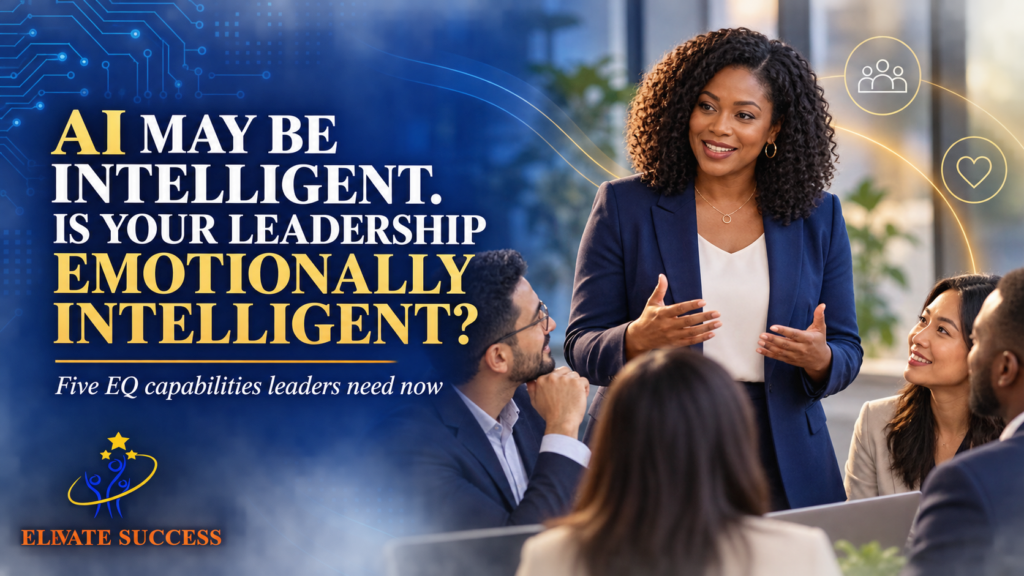
That requires five emotionally intelligent leadership capabilities.
1. Self Awareness
Leaders must recognize when urgency, fear, excitement or pressure is influencing their judgment.
Are you accepting the recommendation because it is sound, or because it supports what you already wanted to do?
2. Emotional Regulation
When technology fails, leaders may become defensive, assign blame or minimize the impact.
Emotionally intelligent leaders pause, assess the facts and respond with intention. They do not allow embarrassment or pressure to determine their response.
3. Empathy
A decision can appear efficient while creating real harm for an employee or customer.
Leaders must consider who will be affected, whose perspective is missing and how the decision will be experienced by others.
4. Constructive Challenge
Employees closest to the work may recognize an AI error before senior leaders do.
Leaders must create enough psychological safety for someone to say, “This does not appear right.”
A team that is afraid to question the leader will also be afraid to question the technology.
5. Accountable Judgment
AI can recommend an action, but a human leader must own the final decision.
“The system told us” is not accountability.
Leaders must be able to explain what was decided, why it was decided, what will be corrected and how they will make things right.
These capabilities apply to executives, managers, supervisors and emerging leaders. Anyone using AI to influence people or decisions has a responsibility to exercise human judgment.
This is also why executive coaching and leadership development must evolve. Coaching should help leaders examine not only what they decided, but also:
What emotion influenced the decision?
What assumption went unchallenged?
Whose voice was missing?
Did employees feel safe enough to speak?
What responsibility is the leader willing to own?
Before expanding your organization’s use of AI, ask:
Are we only teaching people how to use the technology, or are we developing the emotional intelligence required to lead with it?
Your AI strategy may be technical, but responsible adoption is deeply human.
Elevate Success helps leaders strengthen emotional intelligence, judgment, accountability and trust during periods of transformation.